
Independent 4G for hundreds of supermarket kiosks
Self-service kiosks in metal-clad supermarkets, each needing a connection that doesn't depend on the retailer's network — or on predictable goodwill about data costs.
The problem
Store-provided internet access wasn't always available or suitable, and metal-clad supermarket buildings attenuated cellular signal. Each kiosk needed a connection independent of the retailer's internal network, and remote maintenance sessions threatened to generate unpredictable mobile data costs across a large estate.
What was done
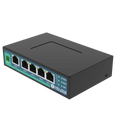
A 4G/LTE router gave every kiosk its own cellular connection. The kiosk architecture combined a Windows Embedded PC, an unsteered roaming SIM for multi-network access, and remote maintenance over LogMeIn. Smart Reboot and the roaming SIMs together addressed the signal problems typical of retail buildings.
How it turned out
The estate ran with high overall connectivity and few connection problems. Packet capture analysis let Intercake measure what a remote-access session actually consumed before committing to wider rollout, producing a repeatable, cost-effective configuration suitable for hundreds of sites.
“There are many layers to achieving a 'fit for purpose' 4G solution and the Robustel team have been an invaluable partner to help us get it right first time.”
Deployed at the time
As named in the original case study. Some of it is superseded, or was never in our range.
- Robustel R2000 4G/LTE router — series not currently stocked
- Unsteered roaming SIMs
- Smart Reboot
What we'd specify today
Current equivalents from our catalogue for this kind of site — not a statement about the hardware installed.

Where this came from
Based on Robustel and Intercake material created in January 2020. "High overall connectivity" is the source's own qualitative wording — no verified uptime percentage is given, and the deployment figures describe the position at that time. The router used was the R2000, a series we no longer stock.